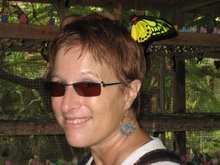
As much as we prefer hiking on our own, it was a good thing we took the park tour (~7 people), as the trails were sometimes amorphous and not always well marked, and there were lotsa wild animals to find and find us. One such animal was a wild dog, who came careening down the hillside about twenty feet from me and another hiker, stopped and barked at us, then went tearing down the hill past the rest of the group. We also spotted gibbons, deer, and exotic birds such as the Great Hornbill (the fellow below), who is on the endangered species list.
Tuesday, January 16, 2007
To the bat cave, Robin! (1/2007, Khao Yai National Park, near Pak Chang, Thailand)
As much as we prefer hiking on our own, it was a good thing we took the park tour (~7 people), as the trails were sometimes amorphous and not always well marked, and there were lotsa wild animals to find and find us. One such animal was a wild dog, who came careening down the hillside about twenty feet from me and another hiker, stopped and barked at us, then went tearing down the hill past the rest of the group. We also spotted gibbons, deer, and exotic birds such as the Great Hornbill (the fellow below), who is on the endangered species list.
Sunday, January 14, 2007
Hey Hey We're the Monkeys (1/15/2007 Lopburi)
As the story goes, once upon a time, a faction from a large family of monkeys inhabiting a nearby country temple decided to head for the city, found Lopburi, and begat and begat and begat. They hang out and down from telephone wires and street signage, stroll the sidewalks, make off with tourists' cameras and bags, and inhabit some of the ruins.
In the historical museum, I saw a Buddha statue I might have seen from up front but hadn't seen from behind: Buddha seated on the curled tail of a naga (protective snake) , with the snake's body climbing up Buddha's spine and its hooded head hanging protectively over Buddha's. I wondered if there was a connection between Kundalini imagery and Buddhism, and a quick Google search found this:"Psychologically, Naga energy can be associated with libido, Kundalini or life force. The whole process of enlightenment is determined by how wisely one handles his or her own Naga energy. The practice of Tantric Kriya Yoga is devoted to the safe awakening and use of Kundalini for higher consciousness. In Tantric Buddhism quite beyond any folkloristic beliefs, there are privileged esoteric levels for the advanced Tantrician. It is stated that the historical Buddha Shakyamuni took rebirth in the Naga realm just before his last incarnation on earth, and while sitting under the Bodhi Tree in India was magically protected by a Naga." (http://www.jeweledlotus.com/tantra_nagaraj.htm)
Leaving Lopburi, Eric and I took a seat on the outbound third-class train, the same as we had ridden in, with big open windows that let in the fresh countryside. As we waited to depart, a team of a few Thai folks relayed between the station and train with around 20 plastic bags filled with fresh-cut meat and chicken, which were set on the floor and steps just inside the train door. En route, the owner of the meat struck up a conversation with me, with the ritual "Where you from?" We chatted for a while, going back over what we said and gesturing a lot, from which I gathered that he owned a store where he sold the meat. I asked him if he did this every day (taking the train 30 minutes into Lopburi, picking up meat, hauling it back to his town) and he got this far-away look in his eyes and said, "yes, every day, for a long, long time." When we pulled up at his town for the one-minute stop, he scrambled, pulling bags of meat and chickens out of the train and handing them to the other small team who had met the train.
We just got to Ayutthaya from Khao Yai National Park; will report more when there's time. There's also a bunch more pics to post ~ these machines are sloooow!
Wednesday, January 10, 2007
1/11/2007 Ranong, Thailand and Kawthuang, Myanmar
After brekkies, we showed up at Pon's and waited an hour past our appointed time for the boat to come in, then left for the dock in a minivan with Pon and a young German family. At the busy dock, we boarded one of many large, motorized longtail (canoe-like) boats: Eric on the back slat, me and the German mom in front of him, and the dad and two young kids in front of us. A captain steered us from behind, with a pre-adolescent Thai boy and another mate on board helping. The crossing to the Burmese city of Kawthuang reminded me of the movie Mists of Avalon, as we glided through the airy mist that clung to the metallic water and small dark islands. I was impressed with how the crew walked barefoot along the six-inch-thick sides of the boat. At one point, the mate and the boy sat on the sides of the boat on either side of Eric, and I was happy to hear a lot of chatter and laughing. Come to find out, the mate offered to help Eric procure some treats while in Myanmar: cigarettes (to which Eric said no), whiskey (to which Eric said no), and finally "boom-boom" (a prostitute, to which Eric said no, and has lived happily to tell about it).
The crossing, including a couple mid-channel stops at customs and immigration checkpoints, took about an hour, and our paperwork went off without a hitch. We had agreed with Pon and the family that we would take just a few minutes to check out the border town before coming back. We wanted to visit one big temple we had spied on the way in. Upon approaching it, though, it turned out to be Moby Dick Restaurant. That plus a swarm of hawkers hanging on to us from the border gate on was enough like India that we were happy to just call it a tour and return to Thailand.
Tuesday, January 09, 2007
Saturday, January 06, 2007
More India Pics - 1
Saturday, December 30, 2006
1/3/2007 Bangkok and Koh Lanta, Krabi, Thailand
In happier news ~
As I was ill and we have been to Bangkok a couple times before, we didn't tour much there; we mostly took care of errands. Imagine our joy when, for the first time in a month, we bought a SIM card and our phones just worked, with no photo IDs or letters from police commissioners required! We saw Happy Feet at the IMAX theater; it was very funny and sweet, a well-done mix of Rudolf the Red-Nosed Reindeer, Madagascar, and Over the Hedge. Bangkok had its Christmas decor up and music playing. I missed my family, so much, and was glad that before the trip I got to spend time in WA with Mom and Mel and I had a faux Thanksgiving dinner with SF Bay Area family. I'm also making extensive use of my cell phone.
Surprisingly, there was good food to be found in the Bangkok mall food court ~ a more hygienic and comprehensive version of the street stall foods (not that they should be missed either). You are given a card upon entering, and can eat from any number of cuisines, all cooked up fresh and delish as you order, and pay just one bill on the way out. We also dined at our favorite Bangkok restaurant, Le Lys, which is owned by a French/Thai couple, major yum.
We flew from Bangkok to Krabi province on the west coast, then took a taxi/ferry to the island of Koh Lanta in the Andaman Sea. Ban Saladan is the major "town," on Lanta, consisting of a few streets; we had the taxi drop us at the major intersection and went in search of Eric's German friends' dive shop, Lanta Fun Divers, which turned out to be about two doors down from the intersection. Ulli and Louise were both there, Ulli gave us a ride to his friend's resort on the beach, and Ulli and Louise joined us for drinks the first couple nights. Then Ja-el (my transliteration), owner of Where Else! resort picked us up in her vintage cream-colored Mercedes, and we have parked ourselves in sanctuary there for the duration of the holidays.
In Thailand, most businesses are owned by women, and women usually control the finances. There is also a law stating that a woman's underwear must hang on the line below her husband's. I think I could live with this, as long as I got to pick my own underwear. Who regulates these things?!
Where Else! has got da funk:
http://www.thai-tour.com/thai-tour/South/Krabi/hotel/where-else/index.html
and the folks who run it are laid back and friendly. Our simple, happy bamboo hut is our home, and comes complete with my favorite type of bathroom: outdoor (private), surrounded by a bamboo fence. Festooned with shells and coral, it is the first bathroom I've had with a palm tree growing in the middle of it. Showering in the sunshine or under the stars is bliss. Too, resident hermit crabs, geckos, frogs, and lizards make for great company.
We spend our days on Lanta getting up late (heat + humidity + activity + music playing somewhere on the beach/noisy neighbors/bleating goat herd invading restaurant in the middle of the night = us conked out early a.m.), reading/sleeping in hammocks, hiking/rock scrambling/wading to other beaches, and snorkeling, and Eric goes scuba diving.
The hotel has nightly music; usually a DJ, with live bands on Fridays. One big party "for remembering and forgetting the tsunami" (two years ago)
featured a reggae band we enjoyed, called JOB2DO. The party was a benefit for Lanta elementary school; they raised ~13k baht, which Ja-el said was good. Locals and tourists filled the outdoor restaurant, bar, and other gathering areas. A fire spinner named Wen, friendly and lit up from the inside as well as with her spinning poi, entertained the crowd before the show.
We also had a probable, (what we call) LoveYouLongtime couple sighting at the party: a (usually) older western guy with a young Thai woman, she presumably a paid escort, although you can't always tell. She was quite bubbly, obviously intimate with him, and giggled and whispered to her Thai girlfriend while rolling her eyes in his direction. (Statistically, 90-something percent of all johns in Thailand are Thai; most prostitution is centered in only a couple of tourist areas in Thailand.)
The Thai actually have a word for middle-aged farang (foreign) women who are bitter because middle-aged western men are only interested in Thai girlfriends (have to look up that word). There's also a word for middle-aged western boyfriends who dye their hair bright red to cover up their gray while visiting their Thai GF's relatives in the provinces: Ronald McBoyfriend.
One day we went snorkeling at Koh Ha (translation: five islands) with Ulli and Louise's crew, other snorkelers, and a few scuba divers. The first dive was close to a beach, where we saw coral, sea cucumber, barracuda, parrot fish (so colorful and pretty!), rabbit fish, purple star fish, and jellyfish, among others. Also cool was swimming over the scuba divers, watching them walk like moon men on the ocean floor, and me swimming through their air bubbles, which floated up like mushroom-shaped jellyfish.
On the second dive, we parked the boat on the other side of the island, with no beach. One of the dive masters told me and Eric that there was a lot to see at the far point of the island, so Eric and I made our way there, enjoying the view as the current carried us to the point. After a while, the current got stronger and choppier, and visibility became poor. We decided to make our way back toward the boat, turned onto our backs, and started kicking our flippered feet against the now quite forceful current. I kicked and kicked, but didn't feel like I was getting anywhere; using a big indentation in the rockface as a marker confirmed this as I kept swimming as hard as I could, checking the marker every few minutes. After some time, I became fatigued and discouraged as I realized I had been moving farther out away from the island and Eric, but no closer to the boat. Eric was farther along than I and said that I was making some progress, it was just slow. So I kept kicking and stroking, hard as I could. I started feeling like I couldn't keep it up, but if I stopped the current would take me farther out or swallow me altogether. I could see how people could panic, or lose all strength and drown. I wondered if there was some point where they just gave up or if the waves made that decision for them. I knew I couldn't make it all the way to the boat. I called to Eric (who has taken dive master emergency lessons and has helped save one person) to wait for me and asked him if he could help tow me. I finally made my way to him and we linked arms, kicking together. Still it seemed we weren't getting anywhere. Finally the boat started up, picking us up and then rounding the bend to pick up other divers.
One day we walked, rock scrambled, and waded along several beaches to find Otto, proprietor of Otto's Bar and restaurant. Otto's Bar had been demolished in the tsunami, and Otto rebuilt a few beaches down. Otto and his bar have both been upgraded; his bar/restaurant is now much larger (funk retained) and Otto is married with child. Sad note: Eric remembers when Otto used to sew coffee filters by hand; now Otto has switched to Nescafe! Happy note: the tamarind prawns still rock.
On New Year's Eve, we took a nap from 8:30 p.m. to 11:30 p.m., then sat on the beach as people shot off fireworks. Up and down the coast, people lit and let fly Chinese lanterns. These are papery rectangles with a fire lit underneath; as with hot air balloons, the heat from the fire makes the lantern fly. They ascended like graceful ghosts from along the expanse of the beach, and caught an air current that brought them all together at one point in the sky.
Here's our (subject to inevitable change) schedule for January and February:
Thailand:
Jan 4: Leave Lanta, arrive on Phuket
Jan 5: Leave Phuket, arrive in Ranong
Jan 6: Visa run (to extend our Thai visas) from Ranong Thailand to Myanmar and back
Jan 7: Leave Ranong, arrive Champhon
Jan 8: Leave Champhon, arrive Phetchuburi
Jan 9-11: Phetchuburi -- cool temples and stuff
Jan 12: Leave Phatchuburi, arrive Ayuttaya
Jan 13-24 Ayuttaya --ruins, _____?___ National Park
Jan 25: Leave Ayuttaya, arrive Aranya
Jan 26: Leave Aranya
Cambodia
Jan 26: Arrive Siem Reap
Jan 27-Feb 1: Explore Ankor (temples/ruins)
Feb 2: Leave Siem Reap, arrive Phnom Penh
Feb 3: Leave Phnom Penh (Or stay a day or so more; Eric's friend has an apartment there)
Vietnam
Feb 3: Leave Phnom Penh, arrive Ho Chi Min City/Saigon (HCMC)
Feb 4: Visit HCMC
Feb 5: Leave HCMC
Feb 7: Arrive Hoi An
Feb 8-20: Explore Hoi An, daytrips, FEB 10 DRINKIES!!!
Feb 21 Leave Hoi An for other Vietnam destinations, TBD
Tuesday, December 12, 2006
12/9/2006 Alleppy, Kerala and Paloem Beach, Goa, India
Alleppy is a busy little town with two major canals running through it. Ferries, tour boats, and houseboats run the town canals and into the Keralan backwater canals and a large lake. The last street along the canal in town winds into a shady lane full of friendly people, their homes dilapidated, modest, or middle-class, tiny shops, guesthouses, cows, dogs, goats, and chickens. After 2.5 km, the lane intersects the road leading to our guesthouse, Palm Grove Lake Resort. On one trek into town, a crew of 10 boys, ages six to ten, dragged Eric into a game of football (soccer). People of all ages came running out of houses, yards, and even a churchyard to talk to us. One woman, standing in front of a small, dark home, said that her husband is working in Boston. What different worlds he lives between.
Palm Grove consists of five lovely bamboo cottages along a canal on three acres of family land owned by Mr. Abraham Philips and his wife Maria. Mr. Abraham seems the quintessential gentle-man, kind and soft spoken. He took us on an impromptu tour of his property: coconut palms, banana and mango trees, green peppercorn vines, a fish pond. While I've cooked with my share of cinnamon sticks (from the bark of the tree), I'd never seen a cinnamon tree before. The leaves were bright green, shaped like bay leaves, and tasted of sweet, vibrant cinnamon. Mr. Abraham also turned me on to my first betel nut. Betel nut is a mild stimulant, good for digestion, turns red in the mouth, and over time causes tooth decay. It is shaped like a kiwi and is similar in texture to raw coconut. After our tour, the chef surprised me with betel nut as the locals partake of it: small chunks of betel nut wrapped in a betel nut leaf with a spritz of lime, and folded into a neat little package. The idea is to pop the whole affair into your mouth, chew away, then spit it out when you're done with it. As I was still having residual tummy troubles, and wasn't used to having so much raw leafage in my mouth, I took a few bites and handed the rest to Eric. Once you have it all chewed down, the taste is bright and tart but not to the point of bitterness. And I have to say, afterwards my stomach was better and I felt downright perky.
We spent two days in gliding meditation on a houseboat slipping through the Keralan backwaters. The boat was constructed mostly of wood, thatched palm leaves, and bamboo, with a comfy bedroom and bath, Aneesh's kitchen domain, an upper deck, and a lower deck with two throne-like chairs (ours!) right behind Suresh, our captain. The shores of the canals were stuffed with palm and other trees.
On the small strips of land between canals or between canals and rice paddies, small houses made of cement, thatched palm, or both contained the human life of the backwaters. In front of each house, a few steps led down into the canal. At all hours, in front of most houses, women performed laundry: standing ankle or knee-deep in their saris on the steps, scrubbing clothing or bedding with soap, dunking it in the olive green canal water, swish swish swish, grabbing both ends, twirling, twisting, then THWACKing it on the granite steps, over and over, in a circular motion. You could hear the thwacking, like gunshots, from far down the canal. Then more dunking, swirling, twisting, until finally the woman stepped out of the water, snapped the article open and flat, and hung it on the line.
The canal also serves every other washing purpose for the family, from teeth brushing, hairwashing, and bathing to washing up after the family meal. Women wore their saris or salwar kameezes to fully immerse themselves while bathing and while washing pots and dishes. Men bathed in shorts. Small children were bathed in shorts or nude.
At night we pulled up along the bank, tied the anchoring ropes around coconut trees, and Aneesh fixed us a wonderful dinner of thalis. Before dinner the first night, as it was starting to get dark, Eric and I took a walk along the canal path, between the canal and a rice paddy. People living along the bank came out of their houses and yards to greet us. Many had set out and lit white candles in front of their part of the canal bank in preparation for one of their festivals of lights.
In the early morning, groups of children dressed in English-style school uniforms and backpacks marched along the banks or were ferried to school.
The usual Indian wildlife of goats, pigs, cows, and chickens ran along the bank. We also saw some huge flocks of ducks, like a thousand or more at a time. At one point, a couple of men in canoes attempted to herd the ducks. We wished them good luck.
Canoes seemed to be the main mode of transportation here; they carried families to and fro and once in a while men in canoes loaded with prawns pulled up to us for a sale.
We stopped to see a couple sights. One was a Catholic church built in 1590. The mix of traditional European Catholic and Hindu art featured a colorful serpent's head coming out of the wall, its tongue lashing up for 10 feet to create the pulpit. The neatly kept graveyard in back housed about fifty fresh-looking, marked mounds. The dead are kept here for five years then exhumed, their bones added to a mass grave in back, making room for new occupants up front. We also stopped to see a snake boat that had won the Nehru Snake Boat Race. The snake boat is a long canoe, seating 100 rowers plus an orchestra.
I am typing this into my Treo via my fabric keyboard, as I sit cross-legged on a pillow at a cafe on Paloem beach in Goa. Directly before me lays the white sand beach; about 200 feet from me gentle waves break with about as much effort as anyone else is making here. The sky is clear, the air warm and breezy. Someone just handed me a lemon soda. Slow life good.
This is definitely a tourist beach, with some locals enjoying the sand and water (these would be the boys and men), and selling wares. It is not the famous Goa rave beaches, though. Most folks here are friendly and mellow. Especially happy was having Jess run up and surprise us on the beach; we had left her and Joel in Varkala and originally met them in Ooty...Okay, I just remembered one annoying tourist group. Five good looking Europeans, svelte, bronze, 30s-ish, who lay claim to five of the twelve or so umbrella-ed beach chairs in front of our cafe, laying their sarongs down then going off to play or eat, then re-claiming the chairs, all day long. One of them had a stand-off with another fellow who took the first guy's empty chair, standing in front of him until the guy moved. It's okay, though. Perhaps in their next lives, they will the ones trying to sell jewelry on the beach to feed their five children in Rajasthan. Or maybe they will be the small fat flies in the bamboo shack bathroom, carefully placing their tiny sarongs somewhere dank and horrid. Not that I would wish this on anyone ~ I'm just sayin'.
And what's up with the dogs?! In Varkala and here, by day they are happy playful puppies. By night, they form a herd, harass the cows (and bulls!), and howl like banshees. Mayhem, I tell you.
Tomorrow we are flying to Bangkok. We'll be there are couple days to run errands (like either get a new digital camera or find a USB cable and charger, and get the pics I've taken with travel cameras digitized). After that, Ko Lanta for more beachy holiday goodness, until around 1/6.
Thursday, November 30, 2006
November 30, Varkala, Kerala, India
Oh Mandee...
For the uninitiated: the bathing method of choice of most of South and Southeast Asia is the mandee (pronounced mon-deeee). The mandee consists of a big bucket, a large scoop, a faucet, and sometimes a stool. Sometimes there is a shower head as well, which may or may not work. Hot water will come for a specific few hours in the morning, or may be promised and not come, or isn't promised at all. Most hotel bathrooms have a western toilet; some also include the ever popular squat toilet. So the bathroom usually consists of some toilet(s), some bathing method(s), a sink, and a drain; the bathing area is the same as the rest of the room with no curtain.
While I find a cool shower refreshing in the afternoon, I'm still all about the warm water pulsing down one's neck and shoulders thing. Eric, he loves the mandee. Which might explain the condition sometimes of our bathroom back home. I complain that a duck has been bathing in our sink. Eric just quacks.
Friday, November 24, 2006
Pics
Thursday, November 23, 2006
11/25/2006 Varkala, Kerala, India
We arrived in Varkala at 8 a.m., and walked about three kilometers up the hill from town to the strip of backpacker hotels along a bluff overlooking the Arabian Sea. The temperature was about 90 degrees Fahrenheit and humid, especially steamy as we were carrying 40-pound backpacks. Our hotel is Clafouti House and we passed its restaurant along the way, along with hawkers for hotels and shop stalls, but Eric thought the sign was only directional and that we needed to go further. At a certain point along the bluff we dropped our packs and he scouted along the strip while I sat on a concrete fence overlooking the sea. About 10 feet away from me a Tibetan man with a short, thin goatee squatted on the fence, perched like a bird, facing Kunga Tibetan shop. He was the only shop owner not hawking his wares; he only jumped off the fence when someone went into his shop, then came back to his perch. Eric returned without finding the hotel; I insisted it was back the other direction and volunteered to go look. First I asked the Tibetan man but he didn't know where it was; another shop owner overheard and confirmed it was back the way we had come. So I went off, confirmed the location, and came back. We started putting on our backpacks; Eric usually helps me up with mine but before he could, the Tibetan man said, "here, let me help you," and helped me on with the pack.
We've been enjoying the clean sea air, the cool ocean, long walks, and generally just chilling out. The town is a typical Indian town with some tourists; this bluff is dedicated to backpacker-type travelers, with thatch-roofed restaurants with ocean views and pillow seating.
Our favorite restaurant is called The Funky Art Cafe, where the yellow dogs have just as much right as anyone to the underside of your table and the steps down to the pillowed chill space; where the music is always upbeat trance, the food is good, they make ice (to begin with) and the ice is made of bottled water. And they have a liquor license. Some of the restaurants here don't, but if asked they will surreptitiously hand you an index-card-sized drink menu and some time after you order, bring you a glass with a shot of warm gin, a bottle of warm tonic water, and some limes. So Funky Art Cafe is our restaurant of choice. Kerala Coffee (with tree house seating) is a favorite too.So far I've had an ayurvedic massage complete with panchakarma and one yoga class. The massage was all about long strokes and lots of herbed? spiced? oil. Panchakarma involved warm oil streaming on my forehead for about 45 minutes; very relaxing. All that concluded with having the woman massage therapist soap me up and bathe me, with a lot of vigor and splashing. And I'm planning to take at least one more yoga class while we are here. The days have been super relaxing and surprisingly short.
There are no beggars here, but you can't get from one place to another without the hawkers practically pleading with you, asking you to promise to come back if you don't go into their shop. I've had a few things I've wanted to buy so got to know a couple of the shop owners. One is a small Indian woman named Sara, who used to be one of the girls selling sarongs on the beach. She hasn't been to school and is self-taught in English. Business hasn't been good and she is stressed because she (along with a lot of others) is paying on a business loan and the creditors can get pretty nasty. From her I bought a bag, sewn by her father (who was busy sewing bags as I shopped). I also went back to see the Tibetan guy. His name is Kunga (hence the shop name). He and his brothers came from Tibet in the early nineties. He too is self-taught and struggles a bit in English; in school in Tibet they were taught Tibetan and Chinese. He says that he would like to take his shop back to Tibet, especially now that his home town has lots of tourists. He doesn't hawk and when I told him how I hate to haggle prices, he immediately dropped the prices on what I bought since he marks it up for the usual hagglers. Interestingly, he is the one shop owner I talked to who said that business was good. From him I bought a silver bracelet with the Om Mane Padme Hum mantra inscribed in Tibetan script and a Tibetan protection symbol pendant.
I just finished reading a great book called The Bookseller of Kabul by Asne Seierstad. Seems like it was made into a movie some time back. The author lived with an Afghan family for a month and then wrote the story as narrative; everything in it is true. The book does a good job paralleling the power shifts and struggles of the bookseller's Afghan/Muslim family with post Taliban-era Afghanistan government and warlords. Meanwhile Eric read Holy Cow by Sarah Macdonald, a love/hate story about one young woman's experiences with India and its multifaceted culture. Both books are compelling and had us up reading hours after we could have fallen asleep.
Another lovely surprise ~ As often happens when we travel, we met again in Varkala a couple we had met at our guest house in Ooty. They have just finished teaching English in Japan for two years, are vacationing in India, then heading home to Sydney, Australia. We are enjoying hanging out and swapping stories, and have exchanged info in case we are ever in each other's hometowns. (Hi Joel and Jess!)
Our travel plans have changed almost daily. For a while we were thinking of going up to McLeod Ganj for December, to be there for Losar (Tibetan New Year) and to hear the Dalai Lama speak. However, both the book Holy Cow and talking to Kunga have put us off of that. It turns out that some time ago there was an attempted attack on the Dalai Lama at such a gathering; so most travelers who come to hear him speak get shunted to another area to hear his talks over a tinny loudspeaker. Additionally, Eric had been having an increasingly bad feeling about going north of Mumbai; he had a knot in his stomach over it. In his words, it felt like we would be "going up that road" (in Ooty) ~ nothing wrong with the place itself but that it could be bad for us personally. Eric being sensitive to different energies and the last person to ever get wiggy about traveling, I wondered if perhaps we were drawing some energy to us that we would experience whether we went north or not, so I suggested we just plan on leaving from Mumbai to Bangkok, and see how that felt for him. A few hours later, he reported that the bad feeling, along with the knot in his stomach, had disappeared. So our plan now is to head for Alleppey in a few days and rent a houseboat to tour the Kerala backwaters for a couple of days, then head north to Goa, Ajanta, Elora, then Mumbai to Bangkok.
Saturday, November 18, 2006
11/19/2006 Coimbatore, Tamil Nadu, India
Where in the world do people get the idea they can whack little girls around?
About a year ago, in a used bookshop, I found a copy of Bhagavad-Gita As It Is, Bhagavad-Gita being one of the utmost spiritual guides in India. I added it to my tower of books to read. As I prepared for this trip, this seemed the most timely time to read it, so I added the 800+ page, hard-back tome to my backpack. This version was writtent/annotated by A.C. Bhaktivedanta Swami Prabhupada, (a Vedic scholar and head of the Krshna Consciousness society and movement.) The author criticizes other versions of Bhagavad-Gita, mostly for un-deifying Lord Krshna as the literal Supreme Personality of Godhead, to which all living entities (that would be us) must be servant. The book is written with the literal translation of each verse followed by the author's interpretation and comment. What made me put the book down was the following ~
"Text 40
Translation
When irreligion is prominent in the family, O Krsna, the women of the family become polluted, and from the degradation of woman-hood, O descendant of Vrsni, comes unwanted progeny.
Purport (author's annotation)
Good population in human society is the basic principle for peace, prosperity and spiritual progress in life. The varnasrama religion's principles were so designed that the good population would prevail in society for the general spiritual progress of state and community. Such population depends on the chastity and faithfulness of its womanhood. As children are very prone to be misled, women are similarly very prone to degradation. Therefore, both children and women require protection by the elder members of the family. By being engaged in various religious practices, women will not be misled into adultery. According to Canakya Pandita, women are generally not very intelligent and therefore not trustworthy. So the different family traditions of religious activities should always engage them, and thus their chastity and devotion will give birth to a good population eligible for participating in the varnasrama system. On the failure of such varnasrama-dharma, naturally the women become free to act and mix with men, and thus adultery is indulged in at the risk of unwanted population. Irresponsible men also provoke adultery in society, and thus unwanted children flood the human race at the risk of war and pestilence."
Maybe this explains why the waiter at our hotel restaurant keeps giving Eric a menu and not me ~ to save me from myself, obviously. (The first time I went and got one myself; the second I asked the waiter to bring me one too. Maybe it would have built some confidence (or horror) for me to tell him about the meals I've treated people to, personally and professionally.) And maybe this explains why the form I filled out for my phone SIM card asked for my father's/husband's name. (I left that field blank.)
Why does it seem fundamentalist everybodies have to demonize, marginalize, and control women? What are they afraid of?
In recent years, under the Bush administration, I've often been out and out embarrassed to say that I am an American. One place I show my patriotism, though, is my gratitude and pride for the intelligent, fearless women and strong, evolved men who have worked to create respect and equal rights for individuals, regardless of sex, ethnicity, or sexual orientation. And I'm grateful that we have enough free press that the works of people such as Alice Walker and Zora Neale Hurston are available to teach and inspire others. There is still more to do and existing rights have to be vigilantly protected, but I am glad we have come this far.
Anyway, I am tossing this version of Bhagavad-Gita, and will find another.
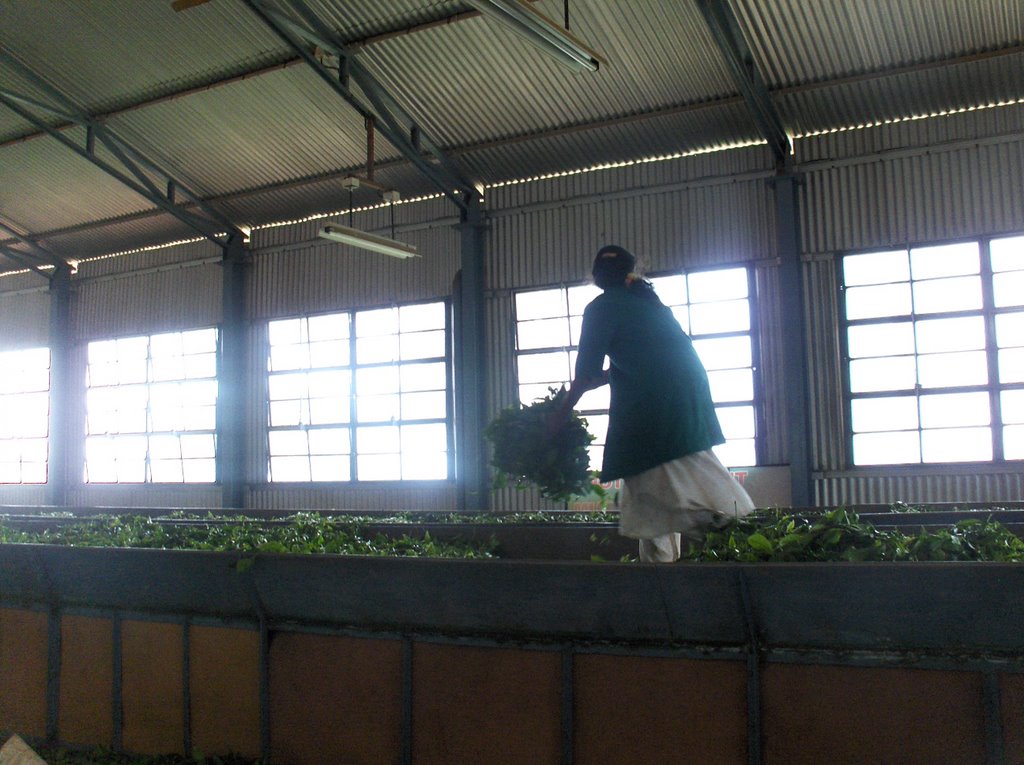
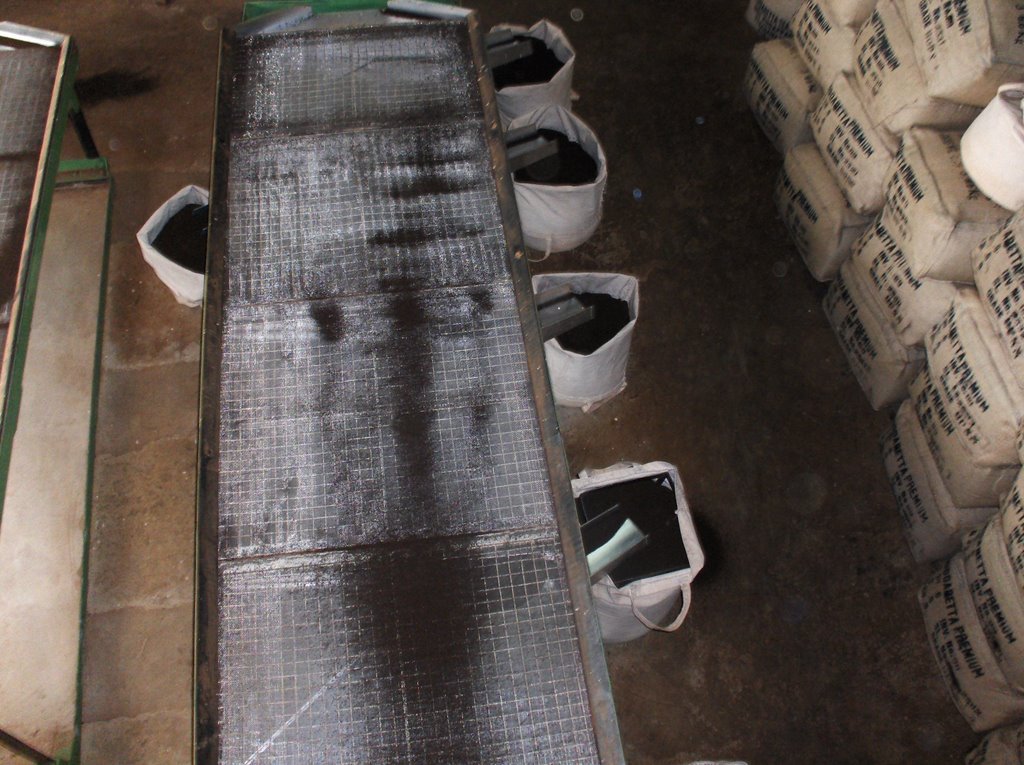
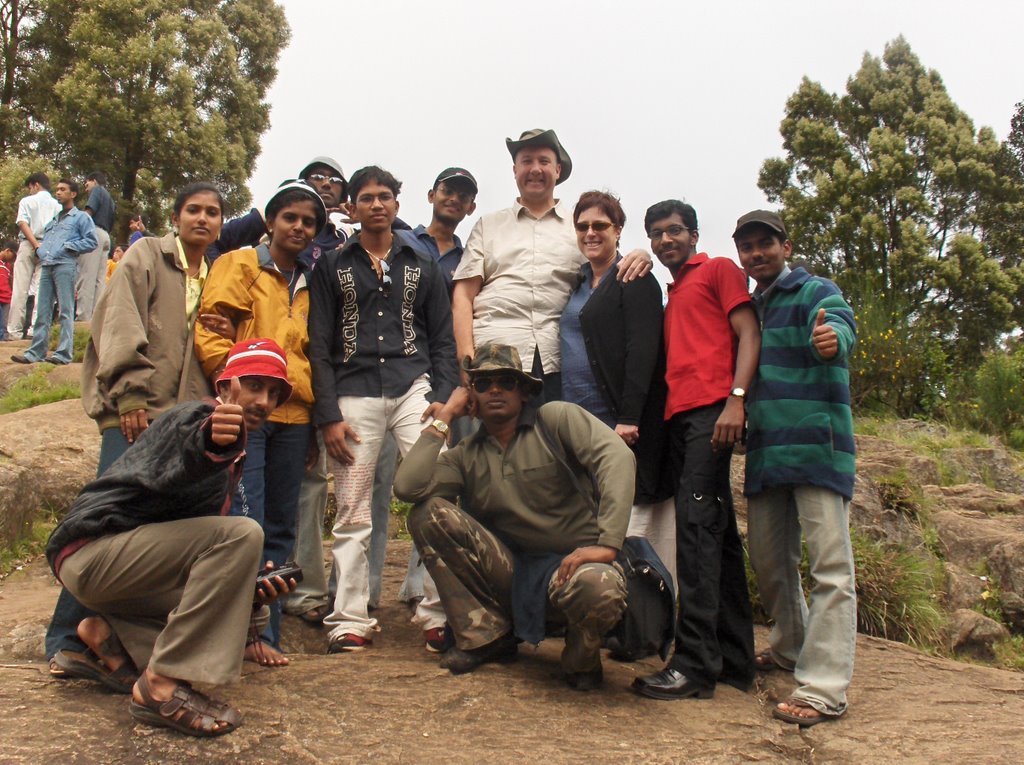
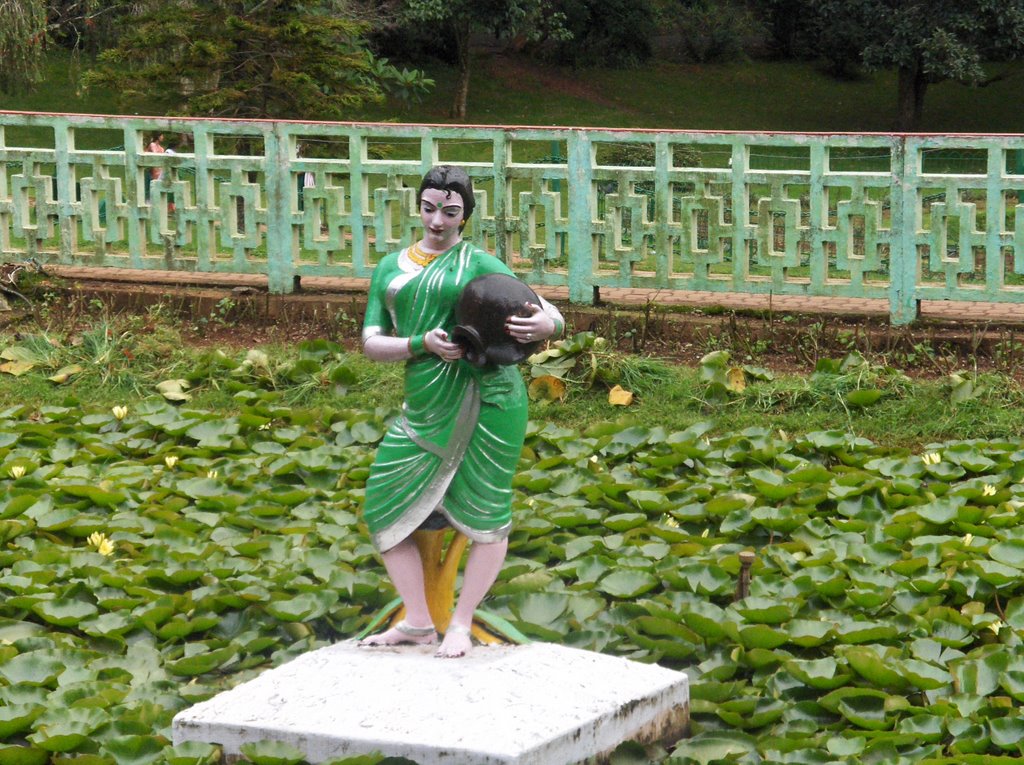
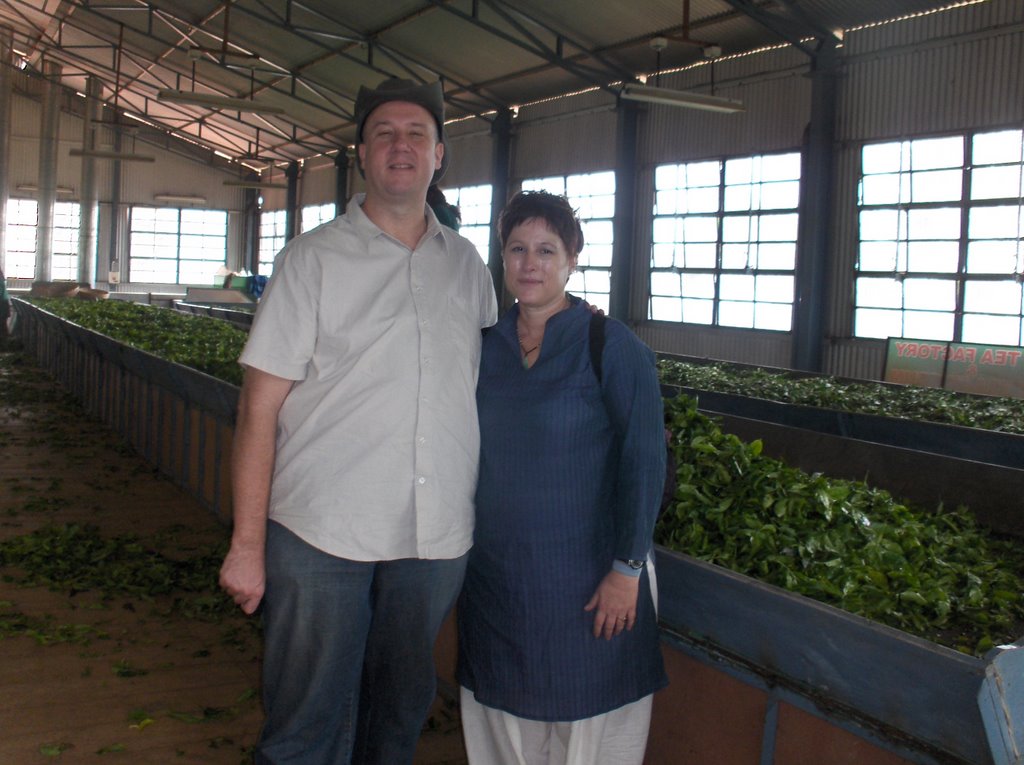
Our last day in Ooty, Eric and I spent the morning at the tea plantation/factory and the afternoon walking around the lushness of Lake Ooty.

Along the same road is an attraction we thought about going to but we ran out of time: the Thread Garden. Turns out this guy spent 12 years making a huge garden containing many species of flowers, all out of thread. Get that man to Burning Man!
Heading for Coimbatore via the Ooty train station reminded me that I wanted to write about queues in India. At the first train station of our trip, we stood in line for a very long time. (The lines take a long time in general and this time the computer network was down.) We were both wearing our big backpacks and at one point, as I turned to talk to Eric, I felt something behind me. I turned around and there were two young women standing close behind us. I asked if I had hit one and she said yes, but it was okay. I stepped out of line and stood a few feet away. Now Eric's bag was dangerously close to the woman, but she didn't back up. And when Eric stepped forward, she did too, with her nose about six inches away from his pack. I couldn't figure it out. More experience in lines revealed this woman's reasoning: if you let more than a foot get between you and the person in front of you, someone will surely cut in between you, and no one says anything about it. At the front of a lot of lines, people gather and try to cut in before the next person in line gets to the counter. At the maharaja's palace in Mysore, you had to check your camera + pay five rupees for the pleasure, at a station away from the ticket office. The "queue" was about 20 people thronging the window, stepping in front of each other, elbowing in, whatever worked, with their cameras and rupees thrust into the window. It looked more like they were placing bets than simply checking in a camera. And the only way to get in to do what you need to do is to step in and do the same. Leaving Ooty, we waited on the platform, along with a bunch of other folks, for the bus to Coimbatore. The bus pulled up, and this previously sociable group of folks stormed the bus, to where there was only some crowded standing room left. I wasn't going to stand in that crush with my backpack for the four hours to Coimbatore, so we left the station and took a taxi.
We are here in Coimbatore as a break on our way to the coast, and we are spending the day doing errands and writing. We are leaving tonight at midnight for Trivandum, then on to Varkala on the Kerala coast, where we plan to stay for maybe a week.
Thursday, November 16, 2006
11/16/2006 Ooty, Tamil Nadu, India
The streets are full of folks relentlessly vying for your attention and wallet. In
And beware the bright, dapper young man who wants to help you with anything.
As we walked up the block to the maharajah’s palace in
At the top of Chamundi Hill in
As we made our way down the 1000 steps to the valley, sadhus at their shrines also demanded money. One pulled me over, "blessed" me with a thumbprint of red powder on my forehead, then held out his plate.
[Mom, close your eyes here. You too, Mel.]
After walking up and down the main drag one night in Ooty, searching for The Sidewalk Cafe, Eric pulled out our trusty Lonely Planet India book, and yet another incarnation of the dapper Dodger popped over, chatted amiably for a bit, then was excited to help us find our restaurant. He pointed out that the landmark we thought we had found,
[Okay you can open your eyes now.]
Part of what keeps us from becoming jaded is that for each Artful (and Not So Artful) Dodger, we also encounter young men who really do help strangers, people who want a picture with you, students and teachers who want to practice their English with you, and schoolgirls who shyly smile, say hello, ask your name and tell you theirs, and shake your hand. To close our hearts and refuse all but the sanitized version of tourism would make us two more ugly Americans, besides being the antithesis of why we are here, which is to experience a lot and participate in our hosting countries. So we try to learn whatever we are supposed to learn from each episode, and enjoy the story as we go on.
The bus ride from
Inside a fenced churchyard, a robed priest and a man in plain clothes sat together on the steps in front of the church, the priest’s right hand pressed against the man’s forehead, perhaps in ablution of the man’s sins, perhaps in blessing.
Rows and rows of shops ran along the road, with all kinds of wares, including bins of grains, chilies, fruits, and vegetables, herbal remedies, pharmaceuticals, clothing, and fresh fruit drinks, and people (mostly men) doing business and socializing.
Cows are given free reign on the road; all honking stops and people and vehicles move around them. We also saw pigs, dogs, goats, and monkeys along the way.
The verdant countryside was refreshing after so much city life, and included rice and cane fields along with more tropical foliage and eucalyptus trees. The ride continued up into the hills and through a national park and animal refuge, then through sporadic towns and up the hill into Ooty.
Yesterday we walked to the
Then a bunch of middle-school-age boys and girls came by, and we took pictures with both our cameras with the boys. The girls shyly shook our hands, exchanged names, and giggled.
We plan to stay in Ooty another day, to visit the tea plantation. Then we are heading south into Kerala~ we’re still working on the details on that.
Saturday, November 11, 2006
11/13/06 Mysore, Karnataka, India

Our home is now rented to my grown kids, who are keeping up the love with our three cats, and at midnight on 11/7 we took off for Bangalore, India.
From the Mandate *This* department ~
The week we left the US, the Democrats took over both the House of Representatives and the Senate, Secretary of State Donald Rumsfeld resigned/was sacked, and India renamed "Bangalore" "Bengaluru." We have yet to actually see signs that say Bengaluru, but I'm sure they will happen at some point; our taxi driver was very happy and proud about the change. Way to take it back! in the US and India.
In recent years, Eric and I have joked about putting maple leaves on our backpacks; standing in front of us on our flight from Singapore to India was one couple who did just that. Brand spanking new ones square on the back pockets; the guy also had a red bag with maple leaves around his neck. I had seen him earlier on the 14-hour flight to Singapore, leaning against a wall in the walkway with an unlit cigarette hanging out of his mouth, looking about ready to crawl out of his skin. To me he seemed more like Sawyer from the TV show Lost, only a little older and more grizzled, with even more attitude than the few Canadians I know, certainly not like the stereotype Michael Moore talks about. In any event, I don't think they were fooling anyone and in line Eric saw they had American passports. Kind of funny, kind of sad; hopefully changes in our government will in time curtail the need for such.
During our 7-hour stopover in Singapore, we tramped through pouring rain through their colorful Chinatown and into Maxwell Food Court, a covered bevy of 100+ food stalls, and quenched Eric’s jonesing for chicken rice. On the way back to the airport we stopped for a few minutes to watch Chinese opera.
In Bangalore/Bengaluru, we stayed at the Jayamahal Palace Hotel, a colonial mansion across the street from the palace. http://www.jayamahalpalacehotel.com
Upon arrival at the reception desk, we were brought glasses of mango nectar, and the gracious manager visited with us as we sat for a spell and enjoyed what tasted like the nectar of the gods after about 28 hours of travel.
At breakfast, we had our first cuppa chai in India, which I dedicated to Serafine, who just loves a good cuppa chai. My lunch dessert of galub jamoon, filled with cheese and pistachios and flambed with brandy, I dedicated to Steve K., who loves galub jamoon.
We took a taxi to FabIndia sari boutique, where I bought a salwar (roomy pants) and four kurtas (long tunic-type shirts in cotton or silk) in gorgeous colors and prints,
well-made, for 25 US dollars. This clothing is lovely and comfortable, just like wearing jammies. I think the women here are so beautiful in their saris; even the teenage girls in the mall seem elegant and assured.
We then walked over to The Forum mall, in search of sandals and local SIM cards for our phones. Note to selves, which we've heard before: everything takes longer in India. As we are foreigners, Airtel wouldn't sell us SIM card until we went to the police station and came back with a letter of permission from the police commissioner. At another store, to get Spice SIM cards, we had to provide our passports and separate photos. So we had to go to the Kodak store and get our pictures taken, wait 45 minutes for them to develop, and go back to get the cards. Eric's quote of the day: "So like we came, like, to India, and like we went to the mall and sat in this booth and like got our pictures taken and stuff?"
The same type of challenges were true buying bus tickets to Mysore and in getting an appointment for a travel agent to book a train for Darjeeling. It's all been good practice in equanimity. It’s also a lot easier knowing you’ve got all the time in the world.
The street in India is as we've heard it would be ~ noisy, polluted, full of a fireworks display of color, and exuding exuberance and pathos.
Any marked lanes are filled with three or more vehicles abreast (cars, taxis, auto rickshaws, motorcycles, bikes, not to mention cows, dogs, donkeys, horse-drawn carriages, and vegetable carts), all honking away, driving within feet or inches of each other, weaving in and out, daring oncoming traffic, and honking constantly. Even in cases of narrow misses, though, there may be shouting but no one seems angry. The rules are real and unspoken. As a passenger, I've pretty much passed on controlling the situation, so sitting back and enjoying the flow of the ride is fun, kind of like bumper cars.
Begging is more evident here in Mysore than it was in Bangalore/Bengaluru: grannies, children, mothers holding babes, all walking alongside you, some trying to hold your arm. Eric had one mother and baby step in front of him again and again as he kept stepping to the side, in a sad dance. It felt heartrending stepping out of the street and into a shop to fill our bellies with talis, but that's how it goes here.
Our talis were served on banana leaves: banana leaf first, then rice, then ghee on the rice, then dal (lentils), korma, and another dish alongside the rice, then little pots of raita, yogurt, and other dipping sauces are placed on the side. Using your right hand, you form a rice ball, then dip it in one of the sauces and pop it into your mouth. Afterwards we were served a small tray that looked like a Zen garden, full of candied fennel and toothpicks.
Most of the people here have been very kind and gracious. At the sari boutique, the security guard who checked my daypack then gave it back to me came running over when I placed it on the ground to fill it with the package of clothing I had just bought. He picked the bag up off the ground and held it open while I inserted the clothing, then zipped it up and handed it back to me. At lunch, in search of the washroom, I walked into a dining room lined with mirrors and couldn’t figure out which mirrored door was the way to the washroom. I opened one to find the kitchen, another to find a broom closet. I felt like Alice in Wonderland. Then across the room, a frosted glass door opened, and the doorman and maitre’d, smiling and gentle, shooed me in and directed me to the washroom. Later that day, as we were trying to direct our taxi driver to us, we had problems understanding him on the phone and a man sitting next to us kindly took the phone and directed the taxi driver.